SENNELIER PASTEL PENCILS: COMPLETE TEST & PROFESSIONAL REVIEW
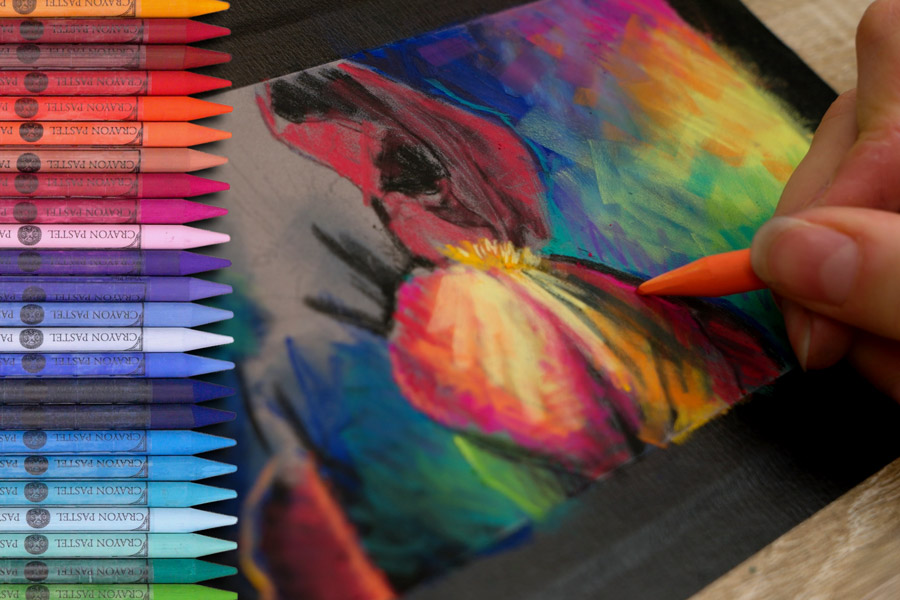
Very cool… Aand very disappointing.
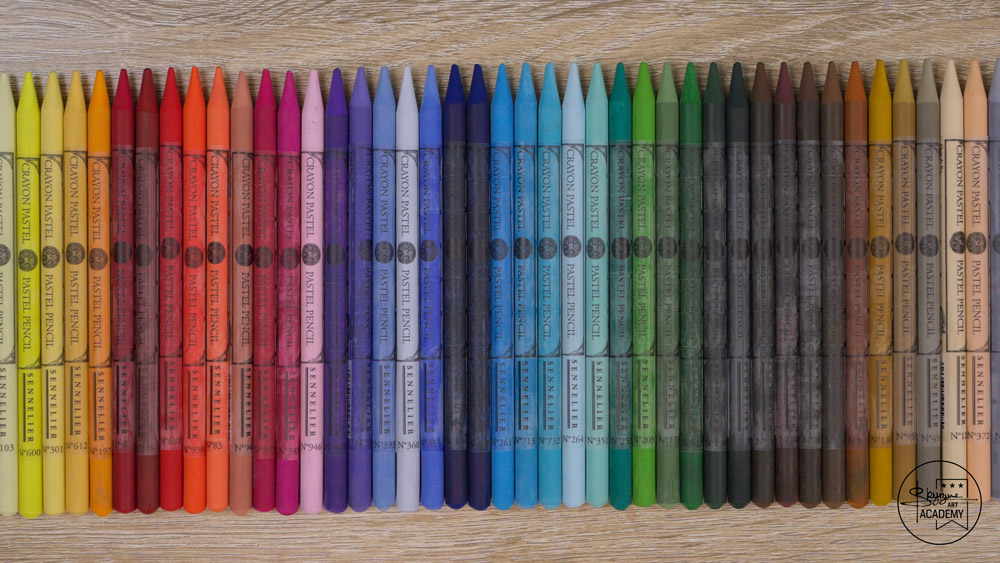
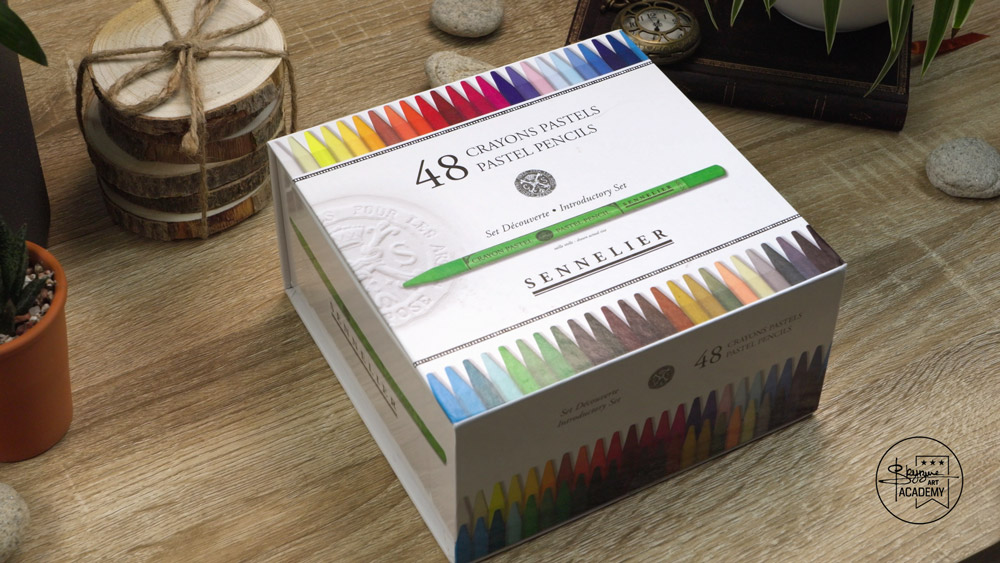
PACKAGING
The packaging is sometimes quite basic, but here I find the box really appealing: it’s a beautiful set.
However, I did notice a durability issue: mine arrived torn on one side…
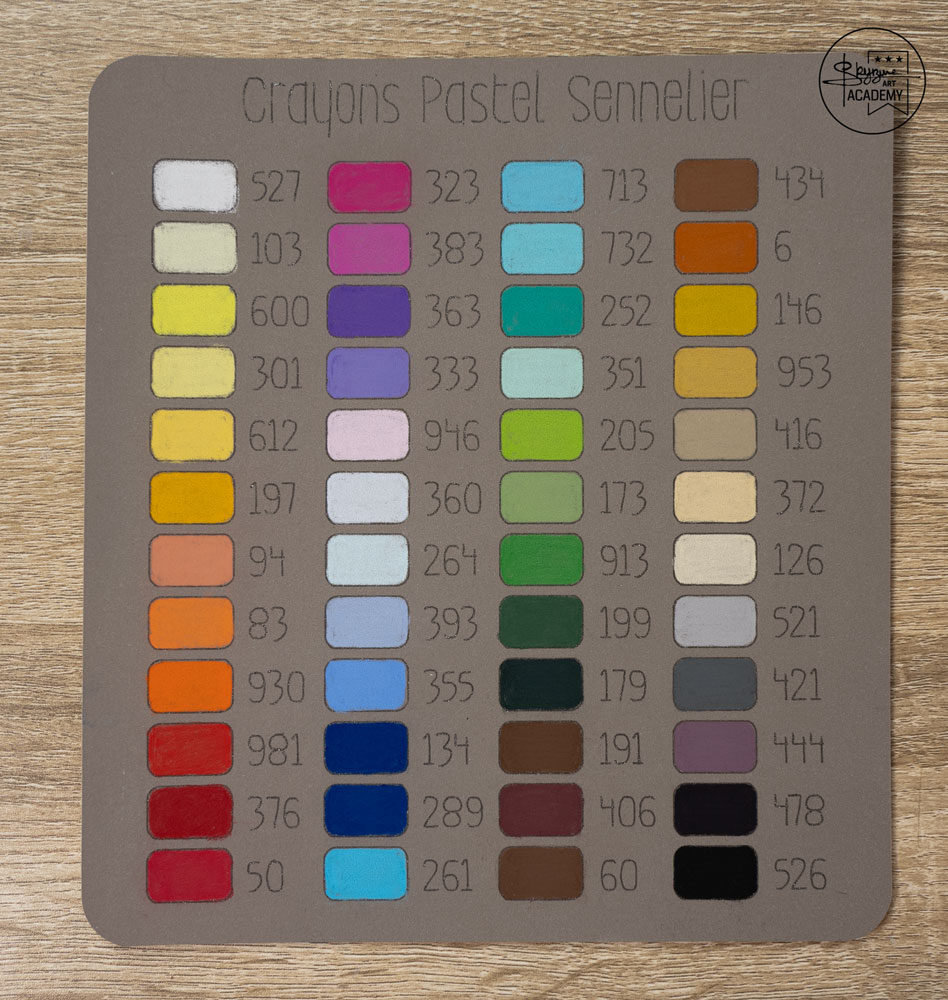
COLOR RANGE (SWATCH SET)
While some pastel stick brands offer more than 1,200 color references, and more and more pastel artists are using pencils, it’s quite disappointing to see that pencil brands still offer extremely limited ranges.
Here again, only 48 shades are available.
If we break it down into base colors, light tones, and dark tones, there are clear gaps, and several colors are far too similar…
Notably:
- two strictly identical browns (191 and 60)
- two identical ultramarine blues (134 and 289)
- two sky blues that are too close (261 and 713)
This is a design issue for such a limited range: these duplicate or overly similar shades should have been replaced with other colors to better balance the set.
The 478 is a very dark violet, almost black, which isn’t really justified in this palette.
Neutral greys are missing.
It’s also unfortunate not to have cyan, magenta, and yellow (which are available in Stabilo Carbotello for example).
If you work on animal subjects or human portraits, the range is insufficient in natural tones. You’ll need to combine it with other brands.
That said, for animal art, I really love the greige 416!
The browns (191 and 60) are also very interesting.
WHITE & BLACK TEST
The white is good.
The black is decent, but not very deep, with a slight warm brown tendency.
TEXTURE TEST ACROSS THE RANGE
After testing all the shades, it’s clear: there is a texture issue.
Some pastel pencils are pleasant. The core is firm, but still has a minimum of powdery texture.
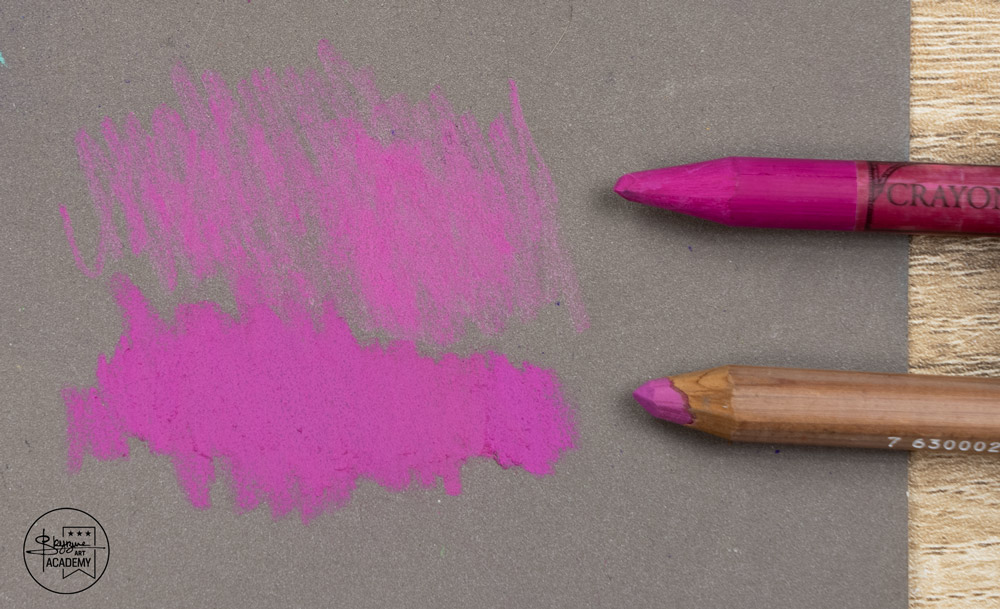
However, the 383 alizarin crimson pencil, for example, is completely defective:
- The texture is extremely hard and very waxy
- It barely deposits pigment on the paper, resulting in a very transparent look
- It burnishes the surface, preventing further layering
In short: unusable.
Some pencils even contain “gritty particles” that scratch the paper — every pastellist’s nightmare… so there is clearly a quality issue.
Both are applied with the same pressure, but the Sennelier is very transparent and burnishes the paper…
THE POSITIVE
They don’t produce pastel dust… but that’s the upside of a flaw: they don’t create dust because they contain more binder and less pigment.
These pencils are very hard, which makes them excellent for extremely precise details without the tip collapsing under pressure.
I really like their versatility and the ability to create very fine details, but also to use them in different ways by playing with widths—even rubbing the full length of the pastel on its side.
The advantage is that you can use them with a very fine point, on an angle, or completely flat.
They allow you to have two tips at each end: for example, one sharpened very fine for finishing details, and the other for flat areas or base textures.
TIP: Make a slight cut around the pastel with a cutter, and it will snap very easily and cleanly exactly where you want.
THE NEGATIVE
Very hard… therefore very fragile.
A wooden pencil falling from desk height may occasionally break the core inside, but not often.
Here, even a minor drop will be fatal.
If you’re looking to buy your first pastel set: forget it.
Unlike other brands, you won’t get satisfying results using them on their own.
They must be combined with pastel sticks or other pastel pencils.
Too much binder, resulting in a waxy feel in some references, insufficient opacity (sometimes very transparent), and colors lacking depth and intensity.
Some pencils contain “gritty particles” that scratch the paper.
There’s a paper wrap around the pencil, but it’s very thin, tears easily, and is extremely difficult to remove completely.
It’s a real hassle to get rid of all the glue.
Worse, glue residue remains on the pastel, making it unusable on the side… even though that’s one of their main advantages.
Major design flaw: the paper should peel off cleanly without leaving residue.
NOTE
Unlike Conté à Paris, which are too wide, these fit into pencil extenders.
This becomes essential if you break them into two or three pieces to use them sideways, allowing you to still use the remaining piece as a pencil for detail work.
WHO ARE THEY FOR? WHAT LEVEL?
They’re worth exploring for artists who already have a solid level, but I strongly advise against them for beginners.
At a lower level, such a demanding texture will simply demotivate you, as you won’t be able to achieve what you want.
They’re better suited for pastel artists who work with rubbed textures, looking for a certain sharpness, with strong angles or broader surfaces.
BEST USE
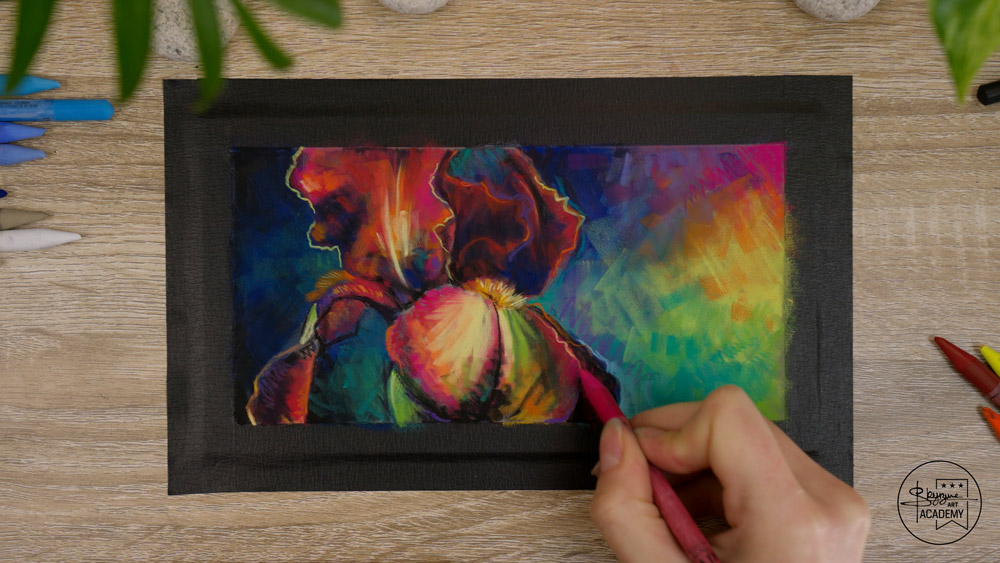
These pencils can be used occasionally in realistic art, but they are better suited for more stylized, graphic works, or abstract art.
WARNING
I’ve seen comments from people happy not having to sharpen wood… and that’s the worst possible reason to buy them!
On one hand, once you know how to sharpen pastel pencils properly with a cutter, it’s not an issue—and it’s an essential skill to learn.
On the other hand, wooden pencils are currently far more efficient: more pigment, better core texture, easier to work with, more opacity, less fragile…
And generally, it’s beginners who try to avoid sharpening—yet these pastels are absolutely not suited for beginners.
PRICE
On Géant des Beaux-Arts, they are more expensive (currently €2.95 per pencil) than Faber-Castell (€2.25) or Stabilo Carbotello (€2.70), even though the latter are widely considered a benchmark for their texture among most pastel artists.
So they are expensive—and given the other issues, the price is hard to justify.
Pigments are the most expensive component. Yet it’s clear these contain less pigment than other brands, with a higher proportion of binder to achieve that hardness.
(The more pigment there is, the softer and more fragile the pastel becomes.)
CONCLUSION AND MY OPINION
I tested them without considering online reviews, because depending on your level and techniques, everything can change.
I was really excited to try them… The concept alone made me want to love them!
But I’m very mixed—honestly quite disappointed.
On one hand, I really love the ability to use them in many different ways to create varied effects: extremely fine, slightly wider, or very broad.
The clean, precise texture is interesting, as it brings a certain sharpness to the drawing.
But the flaws are too significant and disappointing:
- Limited and poorly balanced color range with duplicates or overly similar shades
- Not enough tones to use this brand alone for realism
- Major inconsistencies in texture between pencils
- Some shades are far too waxy and unusable
- Presence of “gritty particles” that scratch the paper
- Paper wrap is very difficult to remove and leaves glue residue, preventing side use
As it stands, beyond the novelty factor, I think they’ll struggle to establish themselves in the professional artist market.
The three pairs of identical or overly similar colors, along with serious texture issues in some pencils, give the impression of a product released too quickly, without rigorous design.
Curious buyers may try them out—but given the issues and the price, they’ll likely turn to either harder pastel sticks or traditional wooden pastel pencils.
Those who bought them to avoid sharpening wood probably won’t achieve anything truly satisfying with these pencils.
So for beginners looking for their first set, I do not recommend them.
They are better suited for experienced pastel artists, and only as a complement to other brands.
WHAT ABOUT YOU?
What do you think? Did you find this article helpful?
Have you already tested these pastel pencils? What did you think of them?
If not, did my tests make you want to try them?
The comment section is yours…
Do you want to improve, feel proud of your work,
and sell your paintings more effectively?
I help and guide you through my online video courses!
From beginner to advanced: dry pastel techniques,
acrylic painting, and oil painting!
Join the circle of ambitious artists!
FOLLOW ME
Pastels and paintings in progress, new commissions and original artworks for sale, videos, news, contests…
Discover my artistic world through my original artworks:
www.skyzune-art.com
You may also like
NEW PASTEL PAPER TEST: PASTELGRAIN
LIST OF MY MATERIAL AND LINKS